
Vitamin C Serum for Pigmentation & Dark Spots: Does It Really Work?
Let’s be honest about something most skincare brands won’t tell you upfront: not every ingredient that claims to fade dark spots actually delivers. The Indian skincare market is full of creams with “whitening” in the name that do little more than sit on your skin and disappoint you every morning.
So when someone asks us — “Does Vitamin C serum actually work for pigmentation?” — we don’t give you a cheerful yes and move on. We’re going to show you exactly how it works, what the science says, how long it really takes, and when it won’t be enough on its own.
Because if you’re dealing with dark spots, melasma, or stubborn post-acne marks — and you’re tired of wasting money — you deserve a straight answer.
Why Pigmentation Is So Common in India (And Why It’s Stubborn)
Before we talk solutions, let’s understand the problem. Pigmentation — uneven skin tone, dark patches, spots — is not just a cosmetic issue. It’s your skin’s response to stress.
In India, there are three main reasons it hits harder than in other parts of the world:
- UV intensity: India receives year-round high UV radiation, even on overcast days. UV triggers melanocytes (pigment-producing cells) to go into overdrive.
- Post-inflammatory hyperpigmentation (PIH): Our skin tones — ranging from medium to deep brown — are biologically more prone to leaving dark marks after any skin trauma: a pimple, a mosquito bite, even a scratch. The darker your natural skin tone, the more melanin is produced in response to injury.
- Hormonal melasma: Common among Indian women, especially during pregnancy or while on oral contraceptives. It creates patchy, symmetrical darkening across the cheeks, forehead, and upper lip.
All three involve the same underlying mechanism: excess melanin produced by your skin. And that’s exactly where Vitamin C steps in.
How Vitamin C Actually Fights Pigmentation (The Real Mechanism)
Here’s the science — explained simply, without oversimplifying.
Melanin — the pigment responsible for dark spots — is produced through a process that depends on an enzyme called tyrosinase. Think of tyrosinase as the switch that turns on melanin production. The more active it is, the more melanin your skin makes, and the darker your spots become.
Vitamin C (L-Ascorbic Acid) inhibits tyrosinase. It physically blocks the enzyme from doing its job. Less tyrosinase activity = less melanin produced = lighter spots over time.
But that’s not all it does. It works on pigmentation through three separate mechanisms simultaneously:
- Blocks new melanin at the source — by inhibiting tyrosinase before pigment forms
- Reduces existing pigment — by interfering with melanin after it’s formed (through a chemical reduction process)
- Accelerates skin turnover — by stimulating collagen synthesis, which helps push pigmented cells to the surface and shed them faster
This triple action is what makes Vitamin C one of the most dermatologist-recommended ingredients for hyperpigmentation — not just marketing, but documented in multiple peer-reviewed studies.
What Kind of Pigmentation Does Vitamin C Work Best On?
This is a question most blogs skip, so let’s address it directly.
| Type of pigmentation | How well Vitamin C works | Timeline |
|---|---|---|
| Post-acne dark marks (PIH) | Very effective | 4–8 weeks |
| Sun spots / tanning | Very effective | 3–6 weeks |
| Melasma (hormonal) | Moderate — helps, but needs SPF too | 8–16 weeks |
| Deep dermal pigmentation | Limited — consult a dermatologist | Varies |
| Pigmentation under eyes | Effective for surface pigmentation type | 6–10 weeks |
The honest truth: Vitamin C works best on surface-level and post-inflammatory pigmentation. If you have deep dermal melasma (diagnosed by a dermatologist), you’ll likely need a multi-step treatment plan beyond serums alone.
The Right Concentration Matters More Than You Think
Not all Vitamin C serums are equal. And this is where most people make their biggest mistake — buying something cheap with a tiny percentage of active ingredient and then wondering why nothing happened after two months.
Here’s what the research actually shows about concentrations:
- Below 8%: Too weak to produce meaningful results for pigmentation. May brighten slightly but won’t fade spots.
- 10–15%: Effective for most skin types. The sweet spot for sensitive skin.
- 15–20%: Optimal for noticeable results, especially for stubborn spots and deeper pigmentation.
- Above 20%: Doesn’t add benefit — instead increases the risk of irritation and skin barrier damage.
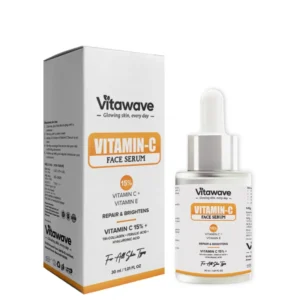
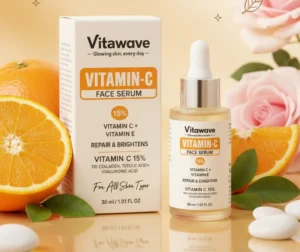
Vitawave’s formula sits at 15% — intentionally. It’s the concentration that delivers clinical results without the irritation risk that comes with higher percentages. For Indian skin types, which tend to be reactive to overactive formulas, this balance matters.
The Realistic Timeline: When Will You Actually See Results?
We’re not going to promise you visible results in 7 days. Nobody honest does.
Here’s what you should realistically expect with consistent daily use:
- Week 1–2: Skin feels more hydrated and looks subtly fresher. You probably won’t see spot fading yet.
- Week 3–4: Early signs of brightness. Some lighter spots may start to fade at the edges.
- Week 5–8: Visible reduction in post-acne marks and sun spots for most users. Skin tone looks more even overall.
- Week 8–12: Significant transformation for most pigmentation types. This is when before-and-after photos start looking dramatically different.
- Week 12+: Maintenance. Continue use to prevent new spots and keep existing ones from returning.
The biggest reason people give up? They stop at week 3 when they don’t see dramatic results yet. Don’t be that person.
The Morning Routine That Actually Fades Pigmentation
Vitamin C for pigmentation doesn’t work in isolation. It works as part of a system. Here’s the exact morning routine that makes it effective:
- Gentle cleanser — Wash your face with a mild, non-stripping cleanser. Hot water deactivates Vitamin C slightly, so use lukewarm or cool water.
- Pat dry — don’t rub — Friction causes micro-inflammation, which can actually worsen PIH in dark skin tones.
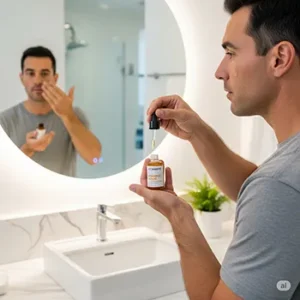
- Apply Vitamin C serum first — 3–4 drops on fingertips. Press gently into skin — don’t rub. Focus on areas with pigmentation: cheeks, forehead, around the mouth.
- Wait 60–90 seconds — Let it fully absorb before layering anything on top.
- Moisturiser — Lock in hydration and support the skin barrier.
- SPF 30+ — this step is non-negotiable — More on this below.
For the evening, you can skip the Vitamin C and replace it with a nourishing moisturiser or, if you use it, a retinol product (applied separately — don’t layer them).
Why Skipping Sunscreen Completely Cancels Out Your Serum
This is the most important section of this entire blog. Read it carefully.
Melanin production is triggered by UV radiation. Every time you step outside without SPF, your skin is getting a signal to produce more melanin — actively creating new pigmentation while you’re trying to fade the old stuff.
Using Vitamin C serum without sunscreen is like trying to empty a leaking bucket. You can pour in as much as you want — the hole at the bottom keeps undoing your progress.
Vitamin C and SPF aren’t alternatives. They’re a team:
- SPF physically blocks UV rays from reaching your skin
- Vitamin C neutralises the oxidative damage that UV causes even when SPF doesn’t catch everything
- Together, research shows they provide up to 4x more photoprotection than SPF alone
Use a broad-spectrum SPF 30 at minimum. SPF 50 if you’re spending significant time outdoors. Reapply every 2–3 hours if you’re in direct sunlight.
Mistakes That Stop Vitamin C from Working on Pigmentation
Even with the right serum, these common errors sabotage results:
- Using an oxidised serum: If your serum has turned yellow, orange, or brown — throw it out. Oxidised Vitamin C can’t inhibit tyrosinase and may actually cause irritation. Store your serum in a cool, dark place and replace it every 3 months after opening.
- Applying on wet skin: Slightly damp is fine, but fully wet skin dilutes the formula and reduces absorption. Pat dry first.
- Mixing with AHAs/BHAs in the same step: High-strength exfoliating acids lower the skin’s pH in a way that can cause Vitamin C to become unstable. Use them at different times — Vitamin C in the morning, exfoliants at night.
- Using too much product: More is not better. 3–4 drops for face and neck. Overloading doesn’t speed results — it just wastes product.
- Missing days: Tyrosinase inhibition requires consistent saturation of the ingredient in the skin. Missing days resets the process. If you forget, don’t double up — just continue your regular routine.
Why Vitawave’s Formula Works Specifically for Indian Skin
A lot of premium Vitamin C serums are formulated for Western skin concerns — primarily ageing and sun damage in fair skin. Indian skin has different needs:
- Higher melanin density means post-inflammatory hyperpigmentation is more severe and more stubborn
- Year-round UV exposure means oxidative stress is constant, not seasonal
- Humidity levels affect how ingredients are absorbed and tolerated
Vitawave’s 15% Vitamin C Serum is formulated with this in mind. The combination of L-Ascorbic Acid, Ferulic Acid (which stabilises Vitamin C and multiplies its antioxidant power), Hyaluronic Acid (for hydration without heaviness), and Tri-Collagen (for skin structure support) creates a formula that addresses the full pigmentation problem — not just the surface symptom.
It’s also lightweight and non-sticky, which matters when you’re layering it under SPF in Indian weather.
Frequently Asked Questions
Can I use Vitamin C serum on active pimples?
Yes, with care. Vitamin C has mild anti-inflammatory properties that can help calm active breakouts. More importantly, using it consistently while you have acne prevents the dark marks that typically follow — which is the harder problem to solve.
I have very dark skin. Will Vitamin C work for me?
Absolutely. In fact, darker skin tones often see more dramatic results because they tend to have more surface-level PIH to begin with. The mechanism — inhibiting tyrosinase — works the same regardless of skin tone. Just start with every-other-day use for the first week to ensure your skin tolerates it well.
Can I use Vitamin C serum with niacinamide?
Yes — despite what older sources say, modern research shows that using both is safe and actually beneficial for pigmentation. Just avoid layering them in the exact same step if you’re using a high-concentration niacinamide product. Apply one, wait for absorption, then apply the other.
My serum has turned slightly yellow. Is it still okay to use?
Very slight yellowing is normal and doesn’t necessarily mean the product has fully oxidised. Deep orange or brown means it’s gone off. When in doubt — fresh bottle, fresh start.
Will Vitamin C serum lighten my overall skin tone?
No — and this is important to understand. Vitamin C doesn’t bleach skin. It regulates melanin production in areas where it’s overproducing. Your natural skin tone stays intact; what fades are the patches of excess pigmentation. This is why it’s safe for long-term use, unlike harsh lightening agents.
The Bottom Line
Yes — Vitamin C serum genuinely works for pigmentation. Not as a miracle. Not overnight. But with consistent use, the right concentration, and SPF as your non-negotiable partner, it is one of the most evidence-backed ingredients available for fading dark spots, post-acne marks, and uneven skin tone.
The key is buying a formula that’s actually stable, correctly concentrated, and designed for your skin type — not just something that says “brightening” on the label.
Millions of Indian skincare users are chasing glowing, even skin. The ones who get there aren’t using ten different products. They’re using the right few — consistently, patiently, and with SPF on top.
✨ Try Vitawave Vitamin C Serum — 15% L-Ascorbic Acid with Ferulic Acid, Hyaluronic Acid & Tri-Collagen. Dermatologist-tested. Built for Indian skin. Available for ₹499.
Use code EARLY50 to get ₹50 off on your first prepaid order.
Related reads: Vitamin C Serum Benefits: 10 Science-Backed Reasons | How to Use Vitamin C Serum for Maximum Glow | Best Vitamin C Serum for Face in 2026
Recent Blogs
-
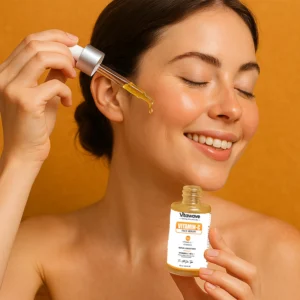 Vitamin C Serum for Pigmentation & Dark Spots
-
 Vitamin C Serum Benefits: 10 Science-Backed Reasons to Use It Every Day
-
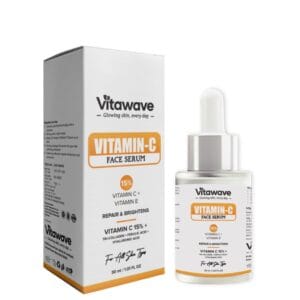 Best Vitamin C Face Serum in India 2026
-
 Best Vitamin C Serum for Glowing Skin
-
 The Ultimate Routine: How to Use Vitamin C Serum for Maximum Glow
-
 Vitamin C Serum
-
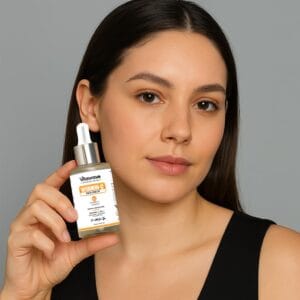 How to Apply Vitamin C Serum – Complete Step-by-Step Guide
-
 Best Vitamin C Serum for Face in 2026
-
 Best Vitamin C Serum for Men in 2026
-
 Vitamin C Serum: Benefits, How to Use It, and Why VitaWave 20% Vitamin C Serum is India’s Best Choice in 2026